
Meet the guests and invited participants joining AIGEN 2026.
AIGEN 2026
Speakers
Profiles of speakers, panelists, and guests participating in AIGEN 2026.
Guests
Speakers and profiles
Keynotes
 Keynote 2 | July 23
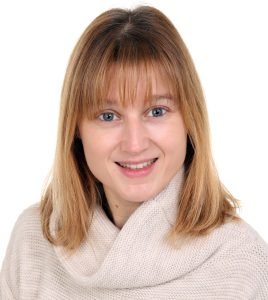
Lilian Jara Sosa
Faculty of Medicine, University of Chile · Institute of Biomedical Sciences
Lilian Jara Sosa is Full Professor at the Faculty of Medicine of the University of Chile and a member of the Institute of Biomedical Sciences. Her academic and scientific career has focused on molecular biology and cancer genetics, with special emphasis on breast cancer genetics, the identification of susceptibility variants, and the functional validation of genomic alterations linked to carcinogenesis. She has also contributed to training new generations of researchers through graduate programs in genetics and biomedical sciences. Her work has been key to strengthening cancer genomics research in Chile and advancing the understanding of the molecular mechanisms underlying different tumor subtypes.
 Keynote 1 | July 23
Lynnette Fernandez-Cuesta
Computational Cancer Genomics, IARC-WHO
Lynnette Fernandez-Cuesta has more than 15 years of experience in thoracic cancer genomics. During her postdoctoral training at the Max Planck Institute and the Department of Translational Genomics in Cologne, Germany, she led the genomic characterization of pulmonary neuroendocrine neoplasms, identifying major molecular drivers in small-cell lung cancer, large-cell neuroendocrine carcinoma, and pulmonary carcinoids. She also led the discovery of recurrent NRG1 fusions in lung adenocarcinomas from never-smokers. As a principal investigator at IARC-WHO, she advanced the Rare Cancers Genomics initiative, which led to important molecular insights in thoracic tumors through projects such as lungNENomics and MESOMICS. Among her most notable contributions is the description of the so-called supra-carcinoids. She currently co-leads the Computational Cancer Genomics team at IARC-WHO together with Matthieu Foll.
 Keynote 1 | July 22
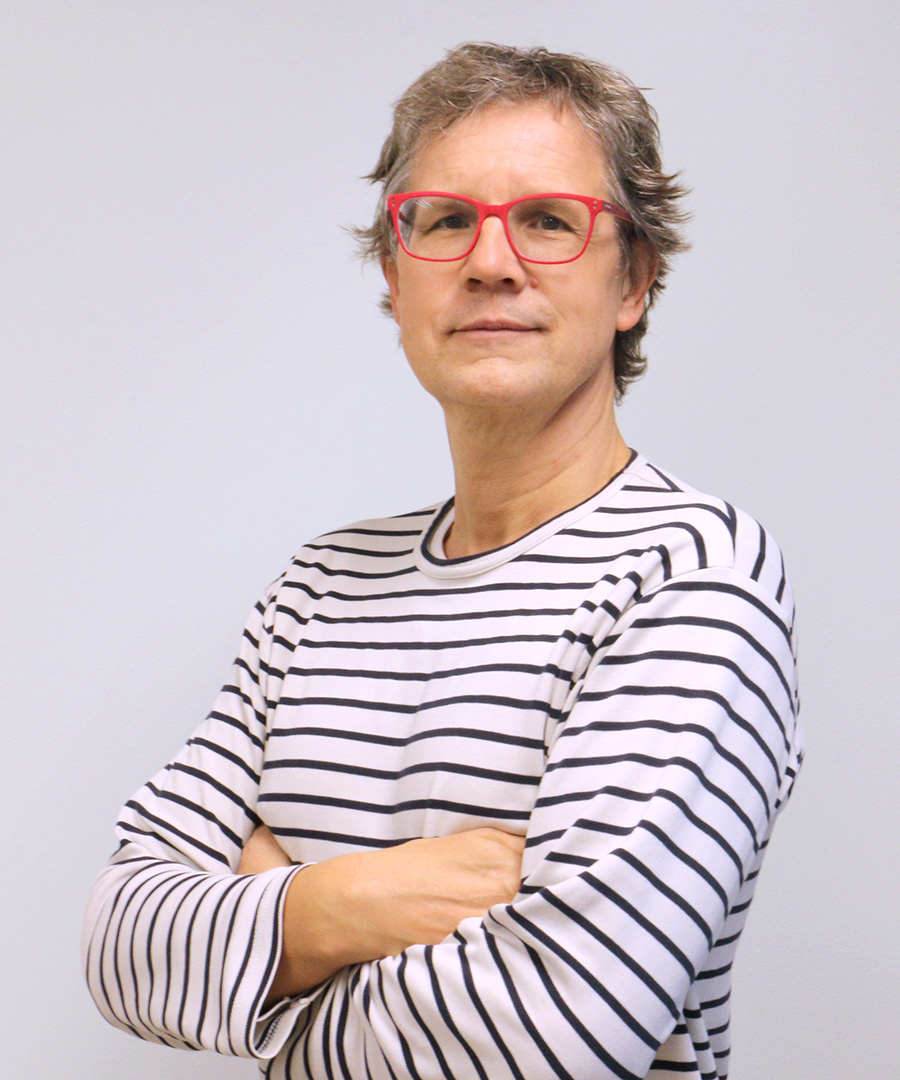
Steffen Härtel
Integrative Biology Program, ICBM · University of Chile
Steffen Härtel is a Full Professor in the Integrative Biology Program at the Institute of Biomedical Sciences (ICBM), Faculty of Medicine, University of Chile. His career combines training in physics with a well-established trajectory in image processing, medical informatics, and health informatics, fields in which he has contributed through both research and the training of advanced human capital. He has also held academic leadership roles such as academic director of the Center for Medical Informatics and Telemedicine (CIMT) and coordinator of medical informatics training programs developed by the University of Chile in international collaboration. His work has focused on the development and integration of computational tools for biomedical analysis, digital transformation in health, and the articulation between computer science, medicine, and innovation.
Talks
 Talk 1 | July 23
Eduardo Pérez-Palma
ICIM, Universidad del Desarrollo
Eduardo Pérez-Palma is an associate research professor at ICIM, Universidad del Desarrollo. His work focuses on the genetics of epilepsy and neurodevelopmental disorders, developing tools for variant interpretation and their application in precision medicine. With research experience in Chile, Germany, and the United States, he has contributed to important advances in human genomics and bioinformatics applied to neurological diseases.
 Talk 2 | July 22
Gabriel Núñez-Vivanco
University of Aysén
Gabriel Núñez-Vivanco is a faculty member at the University of Aysén whose work integrates bioinformatics, computational biology, and modeling applied to biological systems. His trajectory combines research, teaching, and institutional development, bringing an interdisciplinary perspective on the use of computational tools to address questions in biology and health. In addition to his academic work, he has contributed to strengthening university capabilities and regional engagement, offering a particularly valuable perspective on the role of data science and computing in territorial scientific development.
 Talk 3 | July 22
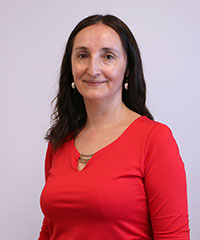
Gloria Henríquez
Center for Mathematical Modeling · University of Chile
Gloria Henríquez is an associate researcher at the Center for Mathematical Modeling at the University of Chile and a specialist in digital health, modeling, and artificial intelligence applied to public health. Her work integrates medicine, epidemiology, and engineering to develop data-driven solutions aimed at improving decision-making and innovation in health systems.
 Talk 1 | July 22
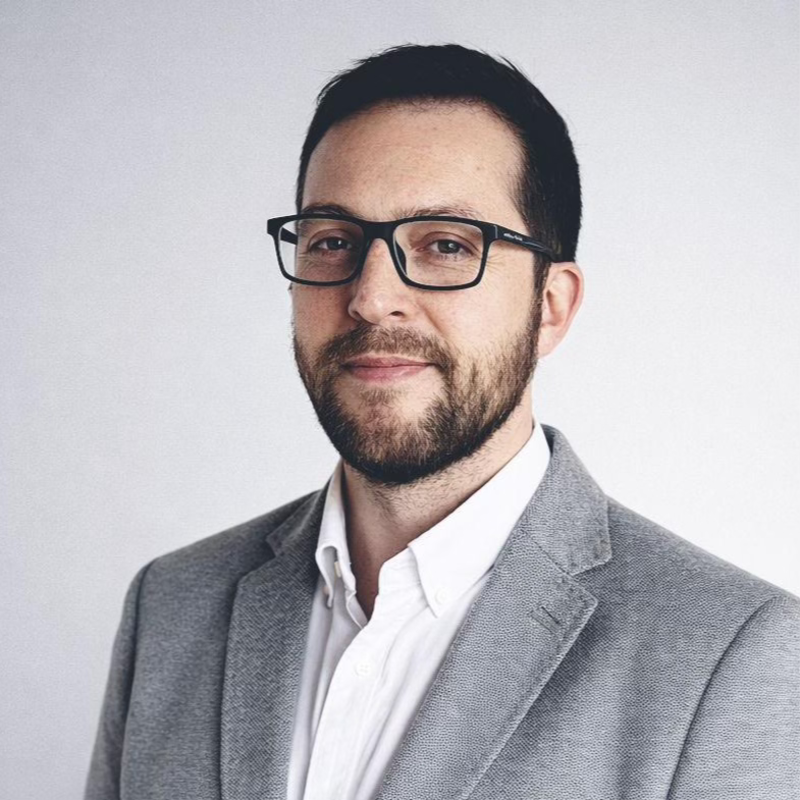
Javier Quezada Marín
Austral Pathology Institute
Javier Quezada Marín is an anatomic pathologist with experience in molecular pathology, digital pathology, and artificial intelligence applied to diagnosis. His work has focused on advancing the adoption of new technologies to improve diagnostic accuracy, optimize laboratory workflows, and expand access to specialized diagnosis through telepathology and collaboration networks in Latin America. He is currently linked to the Austral Pathology Institute, where he has promoted the integration of digital scanning, telepathology, and artificial intelligence into diagnostic practice, with a special interest in translating these innovations into concrete gains in productivity, turnaround time, and cancer patient care. His vision combines technological innovation, practical implementation, and a strong focus on real clinical impact.
 Talk 2 | July 23
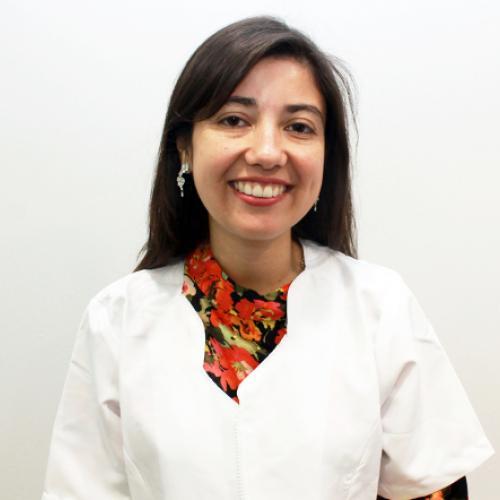
Tamara Pérez Jeldres
Pontifical Catholic University of Chile · San Borja Arriarán Hospital · University of Birmingham
Tamara Pérez Jeldres is a gastroenterologist specializing in inflammatory bowel disease (IBD) at the Department of Gastroenterology of the Pontifical Catholic University of Chile and the Chilean-Japanese Institute of Digestive Diseases (INCHIJAP) at San Borja Arriarán Hospital. She completed a clinical IBD fellowship at Hospital Clínic de Barcelona and a translational IBD research fellowship at the University of California San Diego and the La Jolla Institute for Immunology. She is currently pursuing an MSc in Bioinformatics at the University of Birmingham. Her research focuses on the interaction between genetics, microbiota, and environmental factors in IBD.
 Talk 3 | July 23
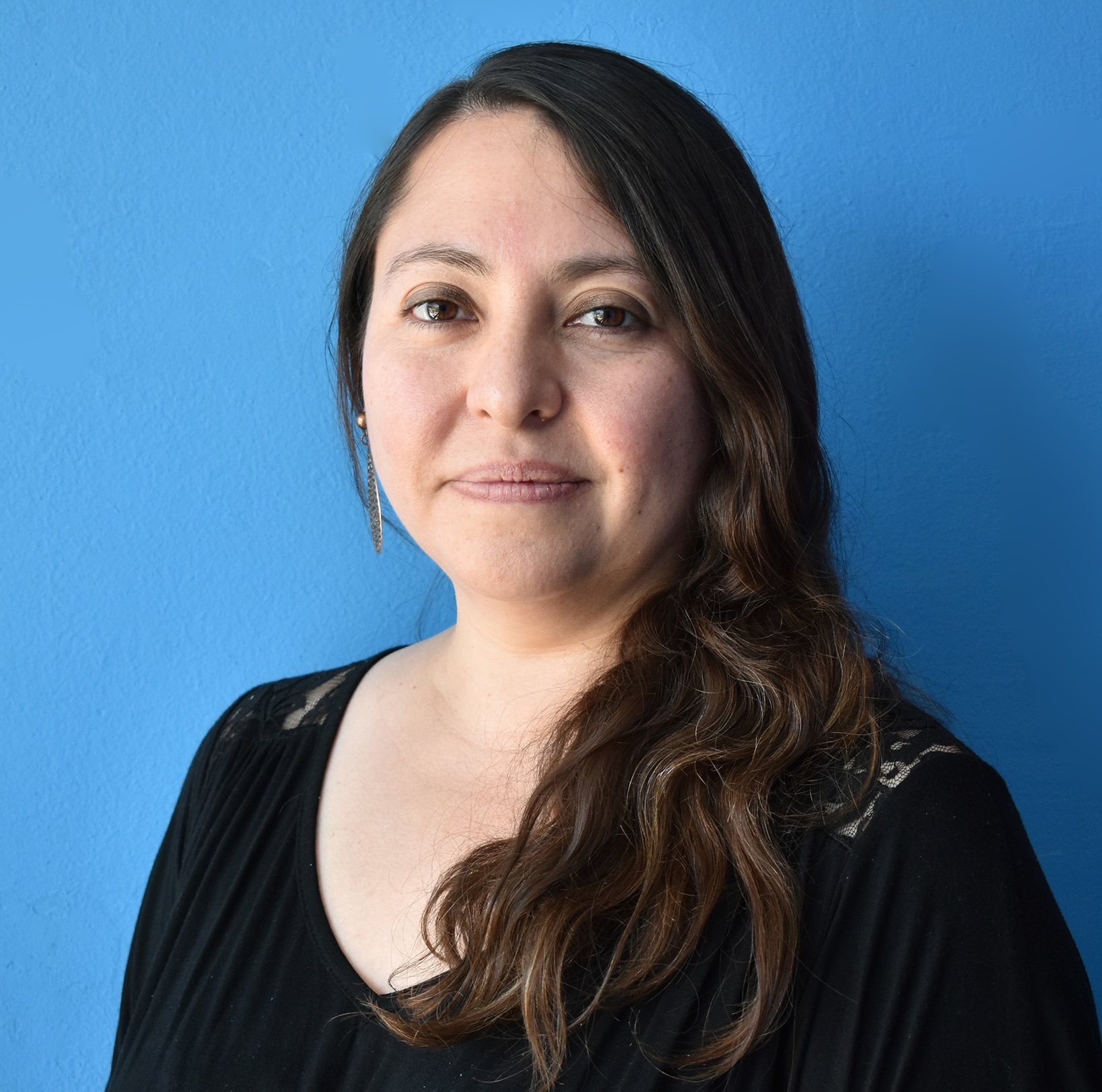
Valentina Parra Ortiz
University of Chile · ACCDiS · Systemix, University of O’Higgins
Valentina Parra Ortiz holds a PhD in Biochemistry from the University of Chile and completed her postdoctoral training at the University of Texas Southwestern Medical Center at Dallas. She is currently an Associate Professor at the University of Chile, an Associate Researcher at ACCDiS, and an Associate Researcher at Systemix, University of O’Higgins. Her research focuses on mitochondrial metabolism, cellular differentiation, and molecular mechanisms associated with cardiovascular and cardiometabolic diseases, integrating cellular models, systems biology, and genomic analyses. She has received major distinctions, including the L’Oréal-UNESCO For Women in Science Award, the Hermann Niemeyer Medal, and the Adelina Gutiérrez Award from the Chilean Academy of Sciences. Since 2025, she has served as Vice President of the Chilean Society of Biochemistry and Molecular Biology.
Panel discussion
 Panel discussion | July 22
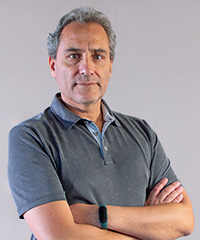
Alejandro Maass
Center for Mathematical Modeling · University of Chile
Alejandro Maass is a Full Professor at the University of Chile and principal investigator at the Center for Mathematical Modeling (CMM). A leading figure in probability, ergodic theory, and interdisciplinary modeling, he received the 2025 National Prize for Exact Sciences, Chile's highest state recognition for scientific achievement in his field.
Flash talks
Alisson Terán
From 3D bioimaging to automated cell analysis
Classification of nuclei in liver tissue using 3DINOvit.
Damariz González
RFhap
Software to separate the genome and improve resolution in genomic studies.
David Weinstein Barriga
Computational design of synthetic antibodies
Antibodies targeting early biomarkers of gallbladder cancer in Chile.
Gabriel Cabas
CRAB-MIL
Interpretable inference of whole-genome duplication from routine tumor histology.
Giovanna Amaya
Title to be confirmed
Selected short presentation for AIGEN 2026.
Mónica Ramírez
Mapping pharmacogenomic opportunity in a Chilean public hospital
Exposure burden, preventive panel architecture, and cost-opportunity in 23,728 outpatients.
Natalia Ibarra
Transferability of polygenic scores for epilepsy
Study in an admixed Chilean pediatric cohort (FONEPI).
Santiago Sepúlveda
Chronic inflammation in the histogenetic pathways of gallbladder cancer and its convergence in the invasive tumor microenvironment
Foundations for the development of chemopreventive and therapeutic strategies.
Posters
Alan Molina
Optimization of Multiple Instance Learning models for immunohistochemistry prediction in low-sample-availability scenarios
Poster selected for AIGEN 2026.
Evelin González
Implementation of a workflow for clinical analysis of BRCA1/2 genes in Chilean breast cancer patients through targeted sequencing
Poster selected for AIGEN 2026.
Joaquín Soto
Accelerating genomics with friendly and collaborative HPC
Poster selected for AIGEN 2026.
José Vásquez
From equations to genes: generative and agentic AI with applications from biomining to public health
Poster selected for AIGEN 2026.
Luis Valenzuela
Interpretable and transferable AI: lessons from the marine microbiome for public health challenges
Poster selected for AIGEN 2026.
Makarena González
Evolutionary and environmental patterns associated with the diversification of Orthohantavirus andesense in South America
Poster selected for AIGEN 2026.
Nairo Torres
Foundation models in histology are now interpretable
Poster selected for AIGEN 2026.
Natalia Poblete
Integrated discovery of known and de novo microRNAs associated with exercise adaptation using nf-sarcopipe
Poster selected for AIGEN 2026.
Nicolás Araya
Multimodal Artificial Intelligence Model for Automated Generation of Prognostic Reports in Acute Respiratory Distress Syndrome (ARDS)
Poster selected for AIGEN 2026.
Noemí Gómez
Characterizing tumor heterogeneity in gallbladder cancer through the construction of a multi-omic atlas
Poster selected for AIGEN 2026.
Santiago Sepúlveda
Robust Biomarker Selection Through Machine Learning for Risk Stratification in Gallbladder Cancer: A Harmonized Multicenter Approach
Poster selected for AIGEN 2026.
Susan Calfunao
Solving centromeres and telomeres: first Chilean T2T haplotype-resolved genome with ONT ultra-long reads
Poster selected for AIGEN 2026.
Moderation
Alex Di Genova
Organizing committee
Moderation of scientific conversations and framing of questions across genomics, bioinformatics, and precision medicine.
Carol Moraga
Organizing committee
Moderation of scientific conversations and framing of questions across research, public health, and innovation.